

If you’ve ever had a health insurance claim denied, you know how stressful and confusing it can be. Medical bills can pile up quickly, and the language in insurance policies is often hard to understand. In these moments, a denied health insurance claim lawyer can make a real difference. This article explains what these lawyers do, why you might need one, and how to choose the right professional for your case. It also covers what to expect during the legal process and common mistakes people make when handling denied claims.
What Is A Denied Health Insurance Claim Lawyer?
A denied health insurance claim lawyer is a legal professional who helps people fight insurance companies when their health claims are rejected. These lawyers know the laws around health insurance, how to read policy documents, and what evidence is needed to win a case. They work for individuals, families, and sometimes medical providers who are having trouble getting insurance payments.
Unlike general lawyers, these professionals focus specifically on health insurance issues. Their experience helps them spot weak reasons for denial, find errors in paperwork, and negotiate with insurance adjusters. Many also have experience with state and federal health laws, making them strong advocates for your rights.
Common Reasons Health Insurance Claims Get Denied
Insurance companies deny claims for many reasons, and sometimes these reasons are valid. However, mistakes and unfair denials are also common. Here are some top reasons claims are refused:
- Pre-existing conditions: The insurer says your illness or injury existed before coverage started.
- Lack of medical necessity: The insurer claims the treatment wasn’t needed.
- Out-of-network provider: You received care from a doctor or hospital not covered by your plan.
- Missing information: Paperwork or medical records are incomplete.
- Administrative errors: Wrong billing codes or typos lead to automatic rejections.
- Policy exclusions: The specific treatment or medication isn’t covered by your plan.
Sometimes, simple errors can cause denials. For example, if your doctor’s office uses the wrong billing code, the insurance company’s computer system may reject your claim automatically. A lawyer can help spot and fix these mistakes.
When Should You Hire A Lawyer?
Not every denied claim needs a lawyer. Sometimes, a quick call to the insurance company or your doctor’s office is enough to fix an error. But you should consider hiring a denied health insurance claim lawyer if:
- Your claim involves a large amount of money or life-changing treatment.
- The denial reasons are unclear or seem unfair.
- You’ve appealed to the insurance company and still got rejected.
- Your policy is complicated and hard to understand.
- You’re facing aggressive collection actions for unpaid medical bills.
A key insight: Many people wait too long to get help. Early legal advice can prevent mistakes in appeals and increase your chance of success. Also, some policies have strict deadlines for appeals—missing them can end your case before it starts.
How Lawyers Help With Denied Health Insurance Claims
A denied health insurance claim lawyer does much more than write letters. Here’s what they usually do for clients:
- Review your policy: They explain what your insurance covers and what it does not.
- Analyze the denial letter: Lawyers find out why your claim was denied and if the reason is valid.
- Collect evidence: They gather medical records, doctor opinions, and billing documents.
- Prepare appeals: Most insurance plans require at least one appeal before you can sue.
- Negotiate with the insurer: Many cases are resolved without going to court.
- File lawsuits: If appeals fail, lawyers can take the case to state or federal court.
Let’s compare what happens with and without a lawyer:
| Step | With a Lawyer | Without a Lawyer |
|---|---|---|
| Policy Review | Expert explains coverage and loopholes | May misunderstand terms |
| Appeal Preparation | Professional letters, proper evidence | Risk of missing key documents |
| Negotiation | Strong legal arguments | Limited by lack of legal experience |
| Court Actions | Can file and argue in court | Often not possible |

The Health Insurance Appeals Process
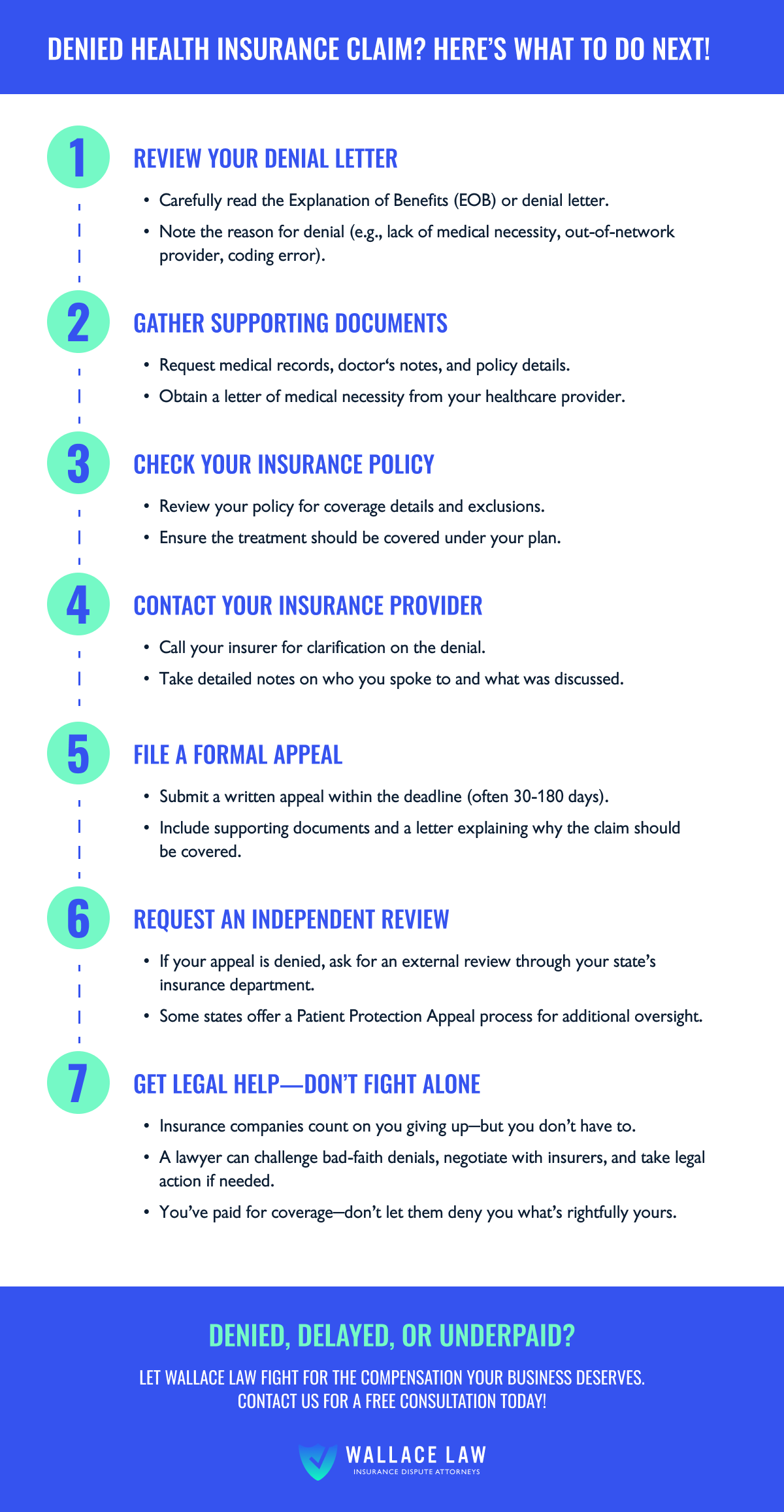
Understanding the appeals process is important before hiring a lawyer. Here are the basic steps:
- Internal appeal: You ask the insurance company to review its decision. This usually must be done within 180 days.
- External review: If the internal appeal fails, you can often request an outside expert to review your case.
- Legal action: If you still don’t win, you can sue the insurer in court.
A denied health insurance claim lawyer can help at every stage, but especially during the internal appeal and court steps. They know the deadlines and required paperwork. Missing a deadline or sending incomplete information is a common mistake.
What To Look For When Choosing A Lawyer
Not all lawyers are the same. Here are some factors to consider when choosing a denied health insurance claim lawyer:
- Experience with health insurance cases: Ask how many similar cases they have handled.
- Knowledge of state and federal laws: Health insurance rules vary by state and policy type.
- Success rate: Find out how often they win or settle cases.
- Fee structure: Some work on contingency (only paid if you win), others charge hourly or flat fees.
- Communication style: You want someone who explains things clearly and answers your questions.
Here’s a quick comparison of fee structures:
| Fee Type | How It Works | Best For | Possible Risks |
|---|---|---|---|
| Contingency | Lawyer is paid a % only if you win | Large claims, limited funds | Lawyer may only take easy cases |
| Hourly | Pay for each hour worked | Short, simple cases | Costs may add up fast |
| Flat fee | Fixed price for the whole case | Standard appeals | May not cover extra work |
How Much Does A Denied Health Insurance Claim Lawyer Cost?
Costs can vary widely. For a simple appeal letter, fees might be a few hundred dollars. Complex cases that go to court can cost several thousand or more. Some lawyers offer a free first consultation, so you can see if the case is worth fighting.
In contingency cases, the lawyer usually takes 25-40% of any money you recover. For example, if you win $10,000 and the fee is 33%, the lawyer gets $3,300. Always ask for a written fee agreement before you start.
Real-life Example: Fighting A Denied Claim
Imagine you need surgery for a rare condition, but your insurance company says it’s “not medically necessary.” You appeal on your own but lose. At this point, you hire a denied health insurance claim lawyer. They review your medical records, get a letter from a specialist, and find that your policy actually covers this surgery. The lawyer prepares a strong appeal and threatens legal action. The insurer reconsiders and pays the claim.
This is a typical outcome—lawyers often get results through negotiation, not just lawsuits. Insurance companies know lawyers understand the system and are less likely to make mistakes.

Common Mistakes To Avoid
Many people make errors that hurt their chances. Here are some common mistakes and tips to avoid them:
- Missing appeal deadlines: Most health plans give you 180 days to appeal, but some are shorter.
- Not reading the policy: Don’t assume something is covered. Check the exact language.
- Lack of documentation: Keep copies of all letters, bills, and medical records.
- Giving up too soon: Many people stop after one denial. Often, appeals work if you keep pushing.
- Not getting help: If you’re unsure, ask a lawyer early. Waiting too long can close options.
A non-obvious insight: Some claims are denied simply because the form was incomplete or a doctor’s note was missing. A lawyer can often fix these issues quickly.
What Laws Protect You?
Health insurance in the US is regulated by both federal and state laws. Key protections include:
- Affordable Care Act (ACA): Bans denying coverage for pre-existing conditions and requires an appeal process.
- Employee Retirement Income Security Act (ERISA): Applies to most employer health plans and sets rules for appeals.
- State insurance laws: These often add extra protections, especially for individual or small group plans.
It’s important to know which laws apply to your plan. For example, ERISA plans usually require you to finish all appeals before you can sue.
If you want to learn more about your rights, you can visit the Healthcare.gov appeal information page.
How To Prepare For A Lawyer Consultation
To make the most of your first meeting, bring:
- A copy of your health insurance policy
- All denial letters from the insurance company
- Medical bills and records related to the claim
- Notes from any phone calls or emails with the insurer
- A timeline of what happened (dates of care, denial, appeals)
Good lawyers will review these and ask questions to understand your case. The more organized you are, the faster they can help.
The Court Process: What To Expect
If your case goes to court, the process may take months or even years. Here’s what typically happens:
- Filing a complaint: Your lawyer submits the lawsuit.
- Discovery: Both sides exchange documents and information.
- Settlement talks: Many cases settle before trial.
- Trial: If no agreement, a judge (not a jury in ERISA cases) decides.
Here’s a side-by-side look at the time frames:
| Step | Typical Time Frame |
|---|---|
| Internal Appeal | 30–60 days |
| External Review | 45–60 days |
| Court Case | 6–24 months |
A practical tip: Most cases do not reach the trial stage. Insurance companies often settle once they see a strong legal case.
Frequently Asked Questions
What Should I Do First If My Health Insurance Claim Is Denied?
Start by reading the denial letter carefully. Check why the claim was refused and gather any missing documents. If you believe the denial is wrong, file an internal appeal within the deadline. If you’re unsure, consult a denied health insurance claim lawyer early.
Can A Lawyer Guarantee My Claim Will Be Paid?
No ethical lawyer can guarantee a win. However, lawyers increase your chances by preparing strong appeals and knowing insurance laws. They can spot errors and build a better case than most people can on their own.
How Long Does The Appeal Process Usually Take?
An internal appeal may take 30–60 days, and an external review can add another 45–60 days. If the case goes to court, it can take several months or years. Acting quickly and providing complete information helps speed things up.
Will Hiring A Lawyer Make My Insurance Company Angry?
Insurance companies are used to dealing with lawyers. Hiring one does not hurt your case. In fact, it often helps—insurers may take your claim more seriously and be more willing to settle.
What If I Can’t Afford A Lawyer?
Many denied health insurance claim lawyers offer free consultations. Some work on contingency, so you only pay if you win money. Always ask about fees up front and look for legal aid if you have limited resources.
Health insurance claim denials can feel overwhelming, but you’re not alone. The right lawyer can guide you through the process, avoid common pitfalls, and improve your chances of getting the coverage you deserve. Don’t wait too long to get help—understanding your rights and options is the first step toward solving your insurance problem.
Read More:
- Affordable Health Insurance Quotes: Save Money on Quality Coverage
- Short Term Health Insurance Online: Fast, Flexible Coverage Today
- Compare Family Health Insurance Plans: Find the Best Coverage
- Private Health Insurance UK: Top Benefits and Best Plans Explained
- Best Private Health Insurance Plans: Top Choices for 2024
- Medicare Supplement Plans Comparison: Find the Best Coverage
- Medicare Prescription Drug Plans: Save More on Your Medications
- Medicare Dental and Vision Coverage: What You Need to Know
